

 See My Latest Article on HelloNation
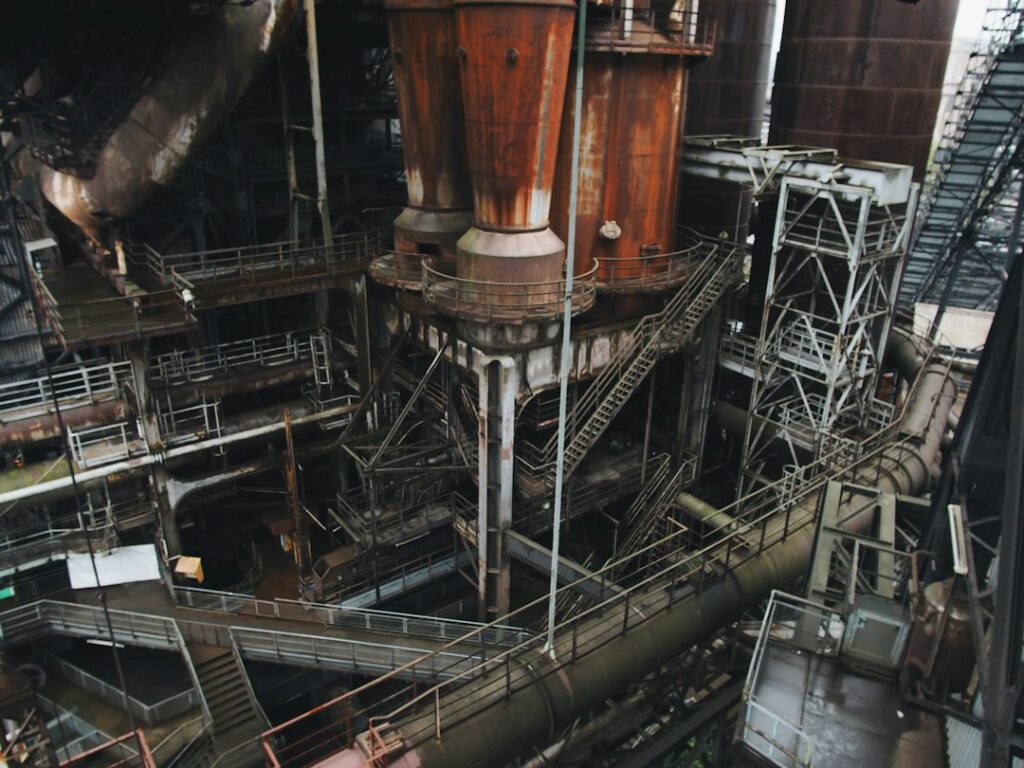
Industrial hoppers are designed to store and discharge bulk materials such as grain, powder, pellets, aggregate, and recycled material. Flow problems usually develop when the material, hopper design, operating conditions, or vibration equipment are not working together.
A hopper that bridges, rat-holes, floods, or discharges unevenly can reduce production, increase equipment wear, and create safety concerns. Understanding the cause is the first step toward choosing a suitable correction.
What causes material to stop flowing in a hopper?
The most common causes are bridging, arching, rat-holing, moisture, poor hopper geometry, and inconsistent material properties. A material may appear dry and loose at the surface while remaining compacted farther down.
Several conditions can occur at the same time:
- Fine particles may compress under their own weight.
- Moisture can cause powder to stick to walls or form clumps.
- Coarse and fine particles may separate during filling.
- A discharge opening may be too small for the material.
- Vibration may be absent, excessive, or applied in the wrong location.
- Worn liners or buildup may change the hopper’s internal shape.
The visible symptom is often simple—a hopper is not emptying—but the underlying cause may require observing how the material behaves during filling, storage, and discharge.
How do bridging and arching block discharge?
Bridging occurs when material forms a self-supporting span across the hopper outlet. Arching is a similar condition in which particles lock together above the opening. Both problems can leave empty space below a blockage while material remains packed above it.
Bridging is more likely when:
- The material contains cohesive powders or damp fines
- Particles are irregularly shaped
- The outlet is too narrow
- The hopper walls are rough or have residue
- Material is compressed by excessive storage time
- The hopper angle is too shallow
A blockage may collapse suddenly after impact or vibration, releasing a large volume of material. That sudden discharge can damage downstream equipment or expose workers to an unexpected surge. Workers should never enter a hopper or place hands near an outlet to break a blockage.
Why does rat-holing happen?
Rat-holing occurs when material flows through a narrow channel near the center while material remains stationary along the hopper walls. This pattern is common with cohesive powders and materials that do not move easily against the hopper surface.
Rat-holing reduces usable capacity and can create stale or compacted material around the perimeter. In food, agricultural, chemical, and pharmaceutical handling, extended residence time may also affect product quality.
Typical contributing factors include:
- High internal friction between particles
- Friction between the material and hopper walls
- A center outlet paired with a hopper that does not promote mass flow
- Material that packs during storage
- Inadequate blending or agitation
- Wall buildup that narrows the effective flow area
A hopper may appear to be functioning because material is leaving the outlet, even though much of the stored material is not moving. Checking wall levels, discharge patterns, and remaining material after emptying can reveal this condition.
How does moisture affect bulk material flow?
Moisture is a frequent cause of flow problems, especially in facilities exposed to humid air, rain, condensation, or temperature changes. In LIttle Rock, seasonal humidity and weather shifts can affect stored agricultural products, aggregates, powders, and other materials if storage areas are not well sealed.
Water can create liquid bridges between particles. As the material dries, those bridges may harden into lumps. Moisture can also make material adhere to hopper walls, increase compaction, and cause fine particles to form a dense layer above the outlet.
Common signs include:
- Clumps appearing in otherwise dry material
- Material sticking to inspection ports or walls
- Flow improving temporarily after manual disturbance
- Different behavior during humid and dry weather
- Unexplained buildup beneath covers, seams, or vents
Moisture control may involve improving covers, sealing leaks, managing condensation, and monitoring the material before it enters the hopper. Vibration cannot reliably correct material that has hardened into large masses.
Can poor hopper design create flow problems?
Yes. Hopper geometry strongly affects whether material moves uniformly or only through a central channel. A hopper with walls that are too shallow, an outlet that is undersized, or transitions that create ledges may encourage stagnant zones.
A well-designed system considers:
- Hopper wall angle
- Outlet size and shape
- Material density and particle size
- Cohesive strength
- Wall friction
- Desired flow rate
- Whether the process requires first-in, first-out movement
- The space available for feeders, gates, or downstream equipment
A round hopper, rectangular hopper, bin, or chute may each respond differently to the same material. Design assumptions based only on material name—such as “sand,” “plastic pellets,” or “flour”—can be misleading because moisture, particle distribution, temperature, and storage time also affect flow.

What role does industrial vibration equipment play?
Industrial vibrators can reduce buildup, loosen compacted material, and encourage flow along hopper walls. They are useful when material is sticking or packing, but they must be selected and mounted according to the hopper, material, and operating conditions.
Vibration problems often result from:
- A vibrator that is too small for the hopper and material
- Excessive force causing compaction or structural stress
- Incorrect mounting location
- Loose mounting hardware
- Operating frequency that does not match the material response
- Using vibration to compensate for a fundamentally unsuitable hopper design
A vibrator mounted near the wrong section may move the hopper structure without effectively transferring energy to the blockage. In some cases, vibration can cause fine particles to settle more tightly, particularly if the material is already prone to compaction.
Vibration should be treated as part of a complete flow system rather than as a universal remedy. Feeders, gates, air injection, liners, agitators, and changes to hopper geometry may also be relevant depending on the material.
Why does material flow unevenly or flood out?
Erratic flow may occur when a bridge breaks, a rat-hole widens, or vibration suddenly releases compacted material. It can also result from a feeder that starts too quickly, a gate that opens abruptly, or a discharge opening that is too large for the material.
Flooding can create:
- Overloaded conveyors
- Plugged chutes
- Dust emissions
- Product segregation
- Feeder or motor overload
- Uneven wear on downstream components
The safest response is to control the discharge rate and identify whether the problem begins in the hopper, at the outlet, or in the equipment below it. A hopper that discharges normally only after repeated vibration may be signaling a developing blockage rather than operating efficiently.
How can operators troubleshoot a flow problem safely?
Start with observation rather than immediately increasing vibration. Record what the material is doing and under what conditions.
Useful checks include:
- Compare flow during different humidity or temperature conditions.
- Inspect for wall buildup, dents, worn liners, and damaged outlet edges.
- Check whether the material has changed in moisture, particle size, or composition.
- Observe whether material is moving across the full hopper or only through the center.
- Verify that vibrator mounts, fasteners, guards, and electrical connections are secure.
- Review whether the hopper is being filled too rapidly or stored for unusually long periods.
- Check downstream equipment for a restriction that may appear to be a hopper problem.
Any inspection involving energized machinery, suspended material, confined spaces, stored pressure, or possible sudden discharge requires appropriate lockout procedures and site-specific safety controls. A hopper should not be entered simply because material is not flowing.
Which problems require more than vibration?
Vibration alone may not solve problems caused by wet material, undersized outlets, severe wall friction, poor geometry, or hardened deposits. In those situations, continuing to increase vibration can damage supports, welds, liners, or connected equipment.
A more complete correction may involve drying or screening the material, changing the outlet, adding a properly designed liner, improving sealing and ventilation, adjusting the feeder, or redesigning the hopper transition. The right solution depends on measured material properties and the actual failure pattern.
For facilities in LIttle Rock, seasonal moisture, outdoor exposure, dust, and changes in stored material can all influence hopper performance. Keeping a simple record of weather conditions, material batches, flow rate, vibration settings, and maintenance findings can help distinguish a recurring design issue from a temporary storage or material problem.