

 See My Latest Article on HelloNation
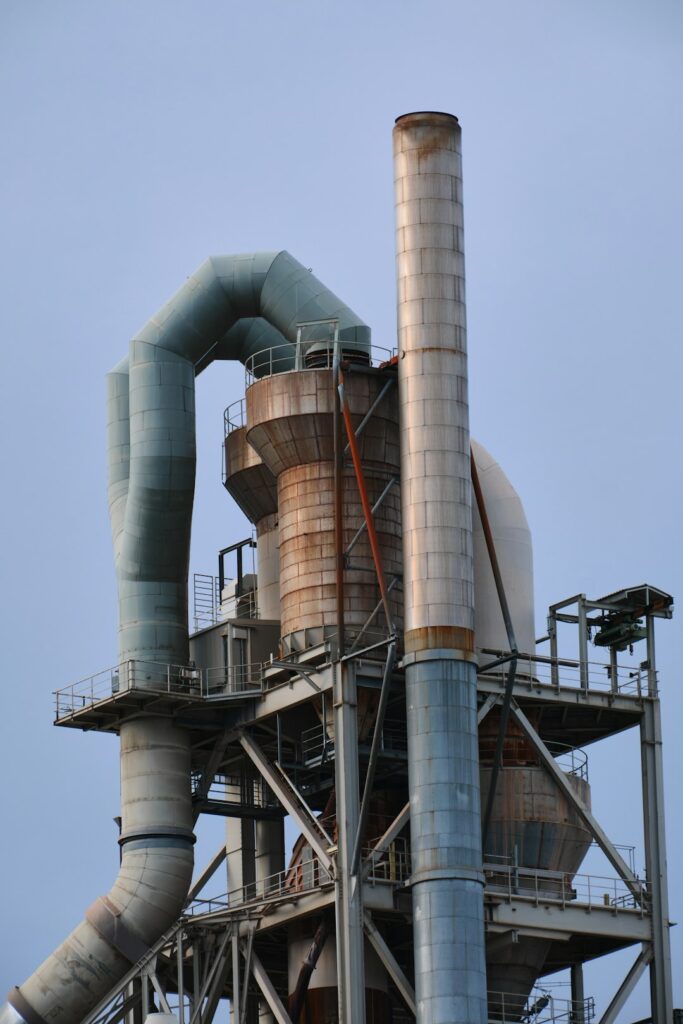
Air cannons are compressed-air devices used to prevent or remove material buildup inside bins, hoppers, silos, chutes, cyclones, and other bulk-handling equipment. They are designed to release a short, high-energy pulse that breaks loose material before it restricts flow or stops production.
For facilities handling grain, aggregate, cement, minerals, wood products, chemicals, or other dry bulk materials, air cannons can be part of a broader material-flow and industrial vibration strategy. They do not replace proper equipment design, maintenance, or safe operating procedures, but they can reduce recurring blockages in difficult areas.
What problem does an air cannon solve?
An air cannon primarily addresses material that has stopped moving because it has formed a bridge, arch, rat hole, buildup layer, or compacted mass.
A bridge forms when material creates a self-supporting span over an outlet. A rat hole develops when material flows down the center of a bin while remaining material sticks to the walls. Buildup can also narrow a chute or cover an internal surface until the equipment can no longer handle its normal volume.
These conditions are more likely when material is:
- Damp, sticky, oily, or temperature-sensitive
- Fine-grained or cohesive
- Irregular in shape
- Stored under pressure or extended residence time
- Affected by vibration, compaction, or changing humidity
An air cannon releases stored compressed air through a valve and nozzle. The sudden pressure wave enters the vessel or chute and applies force to the material and the surrounding surface. The goal is not to continuously blow material through the system. It is to interrupt the condition that is preventing normal gravity flow.
How does an air cannon work?
A typical system has four basic parts: a pressure vessel, an air inlet, a fast-acting discharge valve, and a control or triggering system.
The vessel stores compressed air. When the valve opens, the air is released rapidly through a discharge connection. That release creates a short impulse rather than a steady stream. The impulse can travel through the material and loosen deposits on nearby walls.
The timing and force of the discharge matter. A pulse that is too weak may not affect the buildup. A pulse that is too strong, poorly positioned, or used too often can stress liners, welds, refractory surfaces, filters, or structural components.
Some systems operate manually, while others are connected to timers, level sensors, pressure switches, or automated control systems. Automatic operation can help maintain flow, but it should be configured around the material and equipment rather than used as a substitute for diagnosis.
Where are air cannons commonly installed?
Air cannons are often installed on the outside walls of equipment where material tends to collect. Common locations include:
- The lower cones of storage bins and silos
- Hopper transitions and discharge zones
- Transfer chutes
- Crusher or screen feed areas
- Dust collection and filtration equipment
- Kilns, furnaces, and high-temperature process vessels
- Cyclones and separators
- Ash, slag, or mineral-handling systems
Placement is usually based on the shape of the vessel, the expected flow pattern, and the location of recurring buildup. A single device may help with a localized obstruction, while a large hopper with several problem zones may require multiple discharge points.
The mounting surface must also be suitable. Thin sheet metal, worn liners, cracked welds, or unsupported panels may not tolerate repeated shock loading. The device must be installed as part of the equipment’s structural and process design.
Are air cannons the same as industrial vibrators?
No. Air cannons and industrial vibrators both promote material flow, but they work differently.
An industrial vibrator applies mechanical vibration to a bin wall, chute, screen, or other surface. Vibration can reduce friction and encourage material to move. It is often useful for maintaining flow in smaller hoppers, controlling feed rates, or improving discharge consistency.
An air cannon produces a brief pressure pulse intended to dislodge a larger or more stubborn buildup. It may be selected for heavy deposits, large vessels, high-temperature areas, or locations where continuous vibration would be ineffective.
The two technologies can sometimes be used together, but combining them requires care. Excessive vibration and repeated air pulses can increase wear, loosen fasteners, damage liners, or create unexpected movement in the structure.
What affects air-cannon performance?
Air-cannon performance depends on more than pressure rating. The material, vessel geometry, discharge location, and operating sequence all influence results.
Important factors include:
Material characteristics: Moisture content, particle size, temperature, cohesiveness, and bulk density affect how easily a deposit breaks apart.
Surface condition: Corrosion, worn liners, rough welds, and damaged coatings can create areas where material repeatedly sticks.
Vessel shape: Steep walls may support gravity flow, while shallow transitions or abrupt changes in direction may encourage buildup.
Air quality: Water, oil, or excessive condensate in the compressed-air system can reduce reliability and damage valves. This can matter during humid weather or rapid temperature changes, conditions that are familiar in LIttle Rock.
Pulse frequency: More frequent firing is not automatically better. The system should provide enough time for material to move away before another pulse is released.

Access and maintenance: Valves, solenoids, pressure regulators, and mounting hardware need inspection. A device that fires correctly but is aimed at the wrong location may appear ineffective even when the air system is functioning.
Can air cannons prevent every blockage?
No. Air cannons are not a universal solution for poor flow design, undersized outlets, severe moisture problems, or material that chemically reacts inside the equipment.
They may have limited value when:
- Material is entering the vessel already frozen, saturated, or heavily compacted
- The outlet is too small for the particle size
- A feeder or conveyor is incorrectly sized
- The deposit is caused by a damaged liner or structural obstruction
- The discharge pulse cannot reach the buildup
- The material is prone to hardening through heat, curing, or chemical reaction
Repeated blockages should be treated as a process problem to investigate, not simply as a reason to increase air pressure or fire more frequently.
What safety issues should operators understand?
An air cannon stores significant energy. Accidental discharge can move material, eject debris, damage equipment, or expose workers to pressure-related hazards. Lockout and tagout procedures should address the compressed-air supply, stored pressure, automatic controls, and any connected machinery.
Inspection and service should account for:
- Pressure-vessel condition and approved operating limits
- Valve and piping integrity
- Mounting welds, bolts, and reinforcement
- Unexpected automatic firing
- Falling material after a blockage is released
- Noise and flying particles
- Safe access around elevated equipment
Facilities that handle combustible dust need additional controls. A sudden air pulse can disturb settled dust and create a suspended dust cloud. Air-cannon operation should therefore be evaluated alongside dust collection, housekeeping, ignition-source control, grounding, and applicable workplace safety requirements. An air cannon intended for material flow is not a substitute for a dust-control program.
How can local conditions affect bulk material flow?
Seasonal humidity, rain, temperature changes, and storm-related interruptions can influence stored materials and equipment operation. In the LIttle Rock area, materials may behave differently during humid summer periods than during colder, drier conditions. Moisture can increase adhesion, while condensation may affect air-system components if compressed air is not properly managed.
Facilities should compare blockage patterns with operating conditions. Useful records may include material moisture, temperature, production rate, air pressure, firing frequency, and the location of each buildup. This information can show whether a problem is caused by seasonal material behavior, a developing equipment defect, or an unsuitable operating sequence.
Used thoughtfully, an air cannon is a targeted flow-assistance tool. Its value comes from matching the pressure pulse, mounting position, timing, and safety controls to the actual behavior of the material-handling system.