

 See My Latest Article on HelloNation
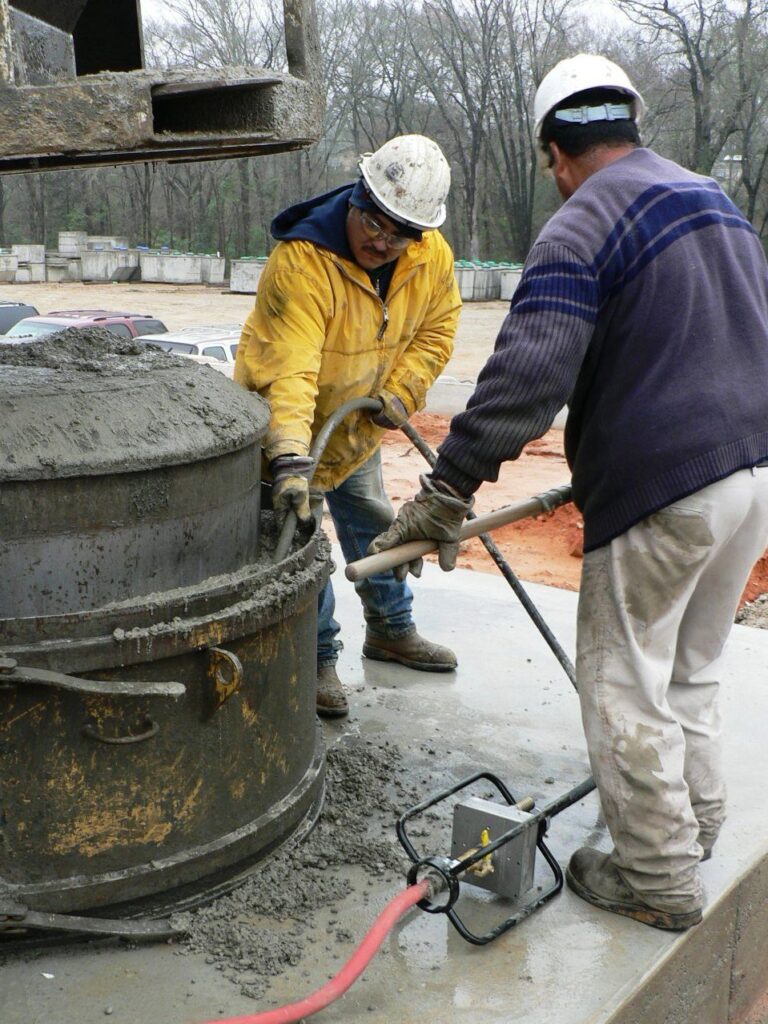
Concrete may look uniform after placement, but freshly mixed concrete contains trapped air pockets and can leave gaps around reinforcement, inside forms, and beneath embedded components. A concrete vibrator improves consolidation by temporarily reducing friction within the mixture, allowing the cement paste and aggregate to settle into a denser, more continuous mass.
For residents and construction crews in LIttle Rock, understanding this process helps explain why vibration matters in foundations, walls, slabs, driveways, retaining structures, and repair work.
What does concrete consolidation mean?
Concrete consolidation is the process of removing unwanted air voids and helping fresh concrete fully surround reinforcement and fill the form. It takes place while the concrete is still plastic, before it begins to harden.
Without adequate consolidation, concrete can contain:
- Honeycombing, where coarse aggregate is left exposed or poorly bonded
- Voids beneath reinforcing bars and embedded hardware
- Weak areas with reduced strength
- Increased permeability, allowing water and chemicals to enter more easily
- A rough or blemished surface after forms are removed
Consolidation does not mean adding more water or simply smoothing the surface. It is an internal process that improves the density and continuity of the placed concrete.
How does a concrete vibrator improve the mixture?
A concrete vibrator sends rapid mechanical impulses through fresh concrete. These vibrations reduce the internal friction between aggregate particles for a short period. As the mixture becomes more mobile, trapped air can rise toward the surface while the solid materials settle closer together.
This action helps concrete move around:
- Reinforcing bars
- Narrow form sections
- Corners and inside edges
- Pipes, sleeves, and anchor bolts
- Congested areas with closely spaced steel
The vibrator does not replace proper placement. Concrete must still be deposited in manageable layers and placed close enough to its final position. Excessive movement, dropping concrete from too great a height, or dragging it long distances can create separate problems.
What types of concrete vibrators are commonly used?
The correct equipment depends on the form, the mixture, the depth of placement, and the amount of reinforcement.
Internal, or immersion, vibrators
An internal vibrator has a vibrating head that is inserted directly into the fresh concrete. This is the most common method for walls, columns, beams, footings, and many heavily reinforced sections.
The head should be inserted vertically and withdrawn gradually so the surrounding concrete can close around the penetration point. Proper spacing between insertion points is necessary because vibration does not affect the entire placement equally. A vibrator that is too small, used too far apart, or operated for too little time may leave isolated areas unconsolidated.
Form vibrators
Form vibrators attach to the outside of a mold or form. They are useful when internal access is limited, such as with thin precast pieces, narrow sections, or certain architectural surfaces.
Because the vibration travels through the form, the formwork must be strong, properly secured, and designed for the resulting forces. Loose or weak forms can shift, leak, or distort during placement.
Surface vibrators
Surface equipment works from the top of slabs and other relatively shallow placements. Screeds and vibrating beams can help consolidate and level concrete at the same time.
Surface vibration is not a universal substitute for internal vibration. It may not adequately consolidate deep sections, thick edges, footings, or congested reinforcement.
What are the visible benefits of proper consolidation?
Properly consolidated concrete generally has a more consistent appearance and fewer surface defects. After forms are removed, well-vibrated walls and columns are less likely to show large pockets of exposed aggregate or cavities along reinforcement.
The structural benefits are more significant than appearance alone. Removing unnecessary air voids increases contact between cement paste, aggregate, reinforcement, and form surfaces. This improves the load-carrying continuity of the hardened concrete and reduces pathways for water penetration.
A small amount of intentionally entrained air may be included in a concrete mixture for durability. That designed air system is different from large, irregular voids caused by poor consolidation. Vibration is intended to remove harmful entrapped air, not eliminate every microscopic air bubble.
Can concrete be over-vibrated?
Yes. Vibration must match the mixture and placement conditions. Excessive vibration can contribute to segregation in mixtures that are poorly proportioned, overly fluid, or rich in mortar. It can also reduce beneficial entrained air when applied for too long or at an unsuitable intensity.
Common warning signs include:
- Coarse aggregate settling away from the paste
- Excess paste or water collecting at the surface
- A noticeable separation of materials
- Form leakage caused by excessive pressure or movement
- Loss of the intended air-void system in air-entrained concrete

The goal is not the longest possible vibration. The goal is sufficient vibration to remove harmful voids and close the concrete around reinforcement without separating the ingredients.
How should a vibrator be used in a wall or footing?
Concrete is usually placed in lifts rather than one very deep pour. The vibrator is inserted at regular intervals into each lift, with some penetration into the layer below when appropriate. This helps knit the layers together and reduces visible pour lines.
The operator should avoid using the vibrator as a tool for pushing concrete horizontally across a large area. It should also not be forced against reinforcing steel, form surfaces, or embedded components. Contact can damage equipment, disturb reinforcement, or affect the position of the formwork.
Withdrawal should be slow enough to allow the concrete to close around the vibrator head. In many placements, the surface will briefly show a ring of movement, and larger bubbles may rise. The exact duration varies with slump, temperature, reinforcement density, vibrator size, and lift thickness.
Why do local weather conditions matter?
Warm, humid conditions can shorten the time available for placing and consolidating concrete. During hot weather, concrete may lose workability more quickly, making it harder to fill narrow spaces and properly surround reinforcement. A mixture that becomes stiff before vibration is complete may require more effort and still produce uneven results.
Heavy rain can also affect fresh concrete if water collects in forms or on the placement surface. Wind and rapid drying may increase surface moisture loss while the interior remains workable. These conditions make coordination between delivery, placement, vibration, finishing, and curing especially important.
Seasonal temperature swings also matter. Concrete that is poorly consolidated may contain more connected voids, allowing moisture to enter and increasing the risk of deterioration over time. Local projects should follow the specified mixture design, placement procedures, and curing requirements rather than relying on a single vibration routine for every season.
What mistakes cause poor consolidation?
Several problems occur repeatedly:
- Placing concrete in lifts that are too deep for the equipment
- Spacing vibrator insertions too far apart
- Pulling the vibrator out too quickly
- Vibrating only near the form face while neglecting the center
- Trying to move large amounts of concrete with the vibrator
- Allowing concrete to stiffen before consolidation
- Failing to secure forms and reinforcement before placement
- Over-vibrating a mixture that is prone to segregation
Good consolidation begins before the equipment is switched on. The form layout, reinforcement spacing, access points, mixture workability, lift thickness, and available power should all be considered in advance.
Is vibration needed for every concrete placement?
Not every placement uses the same method or requires the same intensity. Thin slabs, self-consolidating concrete, small repairs, and certain precast products may use specialized mixtures or alternative procedures. Some placements can be consolidated with rodding, tamping, or other approved methods.
The decision depends on the concrete mixture and the shape of the work. However, concrete should not be assumed to consolidate itself simply because it appears fluid. If the placement contains reinforcement, narrow sections, deep forms, or a stiff mixture, a deliberate consolidation method is usually necessary.
For homeowners observing a foundation, driveway, patio, or retaining wall project, the practical question is whether the placement method is appropriate for the section being filled. Proper vibration is one part of a larger process that also includes correct proportioning, placement, finishing, and curing.