

 See My Latest Article on HelloNation
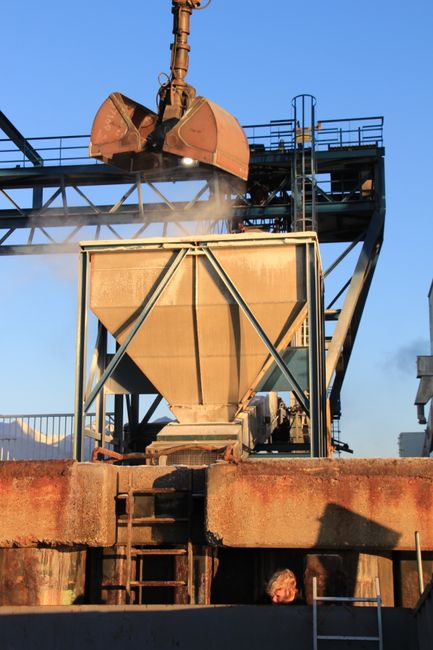
Material bridging occurs when bulk solids form a self-supporting arch across a bin outlet or inside the storage vessel. The bridge blocks normal flow, even though material may remain piled above it. In Little Rock, AR, this problem can affect facilities storing grain, feed, cement, powders, pellets, aggregates, chemicals, and other dry materials.
A bridge may look stable from the outside, but it can collapse suddenly when the blockage shifts. Understanding why bridging develops helps operators recognize warning signs, improve bin design, and choose safer flow-assistance methods.
What is material bridging?
Material bridging is a blockage created when particles lock together or gain enough strength to support the weight above them. The obstruction often forms near the outlet, where the bin narrows and stresses increase.
A bridge can be made of:
- Interlocked particles
- Compacted powder
- Moist or partially hardened material
- Fibrous material that tangles across the opening
- A crust or hard layer formed during storage
The material above the bridge may continue pressing downward, but friction along the bin walls and strength within the stored product can keep the arch in place. This creates a condition sometimes called “no flow” or “arching.”
Bridging differs from ratholing. A rathole forms when material flows through a central channel while stagnant material remains along the walls. Bridging usually stops discharge across the outlet entirely.
Why do some materials bridge more easily than others?
Material characteristics are often the primary cause. Cohesive materials tend to stick to themselves instead of separating and flowing freely.
Common factors include:
Moisture content
Moisture can create surface tension between particles. Even a small increase may make powder or grain more cohesive. In a humid climate, seasonal moisture changes can be significant, especially when a bin is exposed to warm, damp air and cooler stored material.
Water can also cause some products to harden, swell, or form lumps. Materials that were free-flowing when loaded may become difficult to discharge after storage.
Particle size and shape
Fine particles have a large surface area relative to their mass. This increases the effects of electrostatic forces, surface adhesion, and moisture. Flat, flaky, needle-shaped, or fibrous particles may interlock more easily than smooth, rounded particles.
A mixture of large and small particles can also segregate. Fine material may collect near the center or outlet and create a dense, cohesive zone.
Cohesion and compressibility
Some powders become stronger as they are compressed under the weight of material above them. This is common with materials that compact during long storage or under high fill levels.
If the material gains strength faster than it can discharge, an arch may form. The longer it remains stationary, the harder the blockage may become.
Temperature changes
Heating and cooling can change moisture distribution, particle behavior, and the strength of a stored mass. Condensation may occur when warm, moist air contacts a cooler bin wall or product surface. In partially filled bins, repeated temperature cycles can contribute to crusting and localized hard spots.
How does bin design contribute to bridging?
A bin can be structurally sound and still have poor flow characteristics. Bridging is more likely when the vessel does not provide enough space, slope, or outlet capacity for the material being stored.
Important design factors include:
- Hopper angle
- Outlet size and shape
- Wall friction
- Interior surface condition
- Bin diameter and height
- Transition geometry between the vertical wall and hopper
- Location of inlet and discharge openings
- Presence of ledges, seams, stiffeners, or internal obstructions
A shallow hopper angle may allow material to remain stationary along the walls. A small outlet can increase the chance that particles lock together above the opening. Rough or damaged surfaces increase friction and make it harder for material to slide.
The outlet must also match the product. A discharge opening suitable for coarse pellets may be inadequate for a fine powder with high cohesion.
Can vibration prevent or worsen bridging?
Vibration can help break weak arches and encourage material movement, but it is not a universal solution. The wrong vibration pattern, intensity, or mounting location may compact the material instead of loosening it.
Industrial vibration equipment is most effective when it is selected for the bin structure and the stored product. Factors include:
- Material density and cohesiveness
- Bin wall thickness and construction
- Hopper shape
- Fill level
- Desired flow rate
- Frequency and force of the vibration
- Whether the material is fragile or prone to segregation
Short, controlled vibration may release a developing blockage. Continuous or excessive vibration can cause fatigue in the bin, loosen fasteners, damage welds, or encourage fine particles to settle and compact.
Vibration should not be treated as a substitute for correcting poor hopper geometry, moisture intrusion, or an undersized outlet. If the underlying cause remains, the bridge will likely return.
What operating conditions make bridging more likely?
Bridging often develops gradually rather than at the moment of discharge. Storage and handling practices can influence the risk.
Long dwell times allow particles to settle and compact. Repeatedly topping off a bin can increase the load on lower material. Filling from an off-center inlet may cause segregation, leaving a concentration of fines in a problem area.
Other contributing conditions include:
- Loading material while it is warm and discharging it after cooling
- Storing material with inconsistent moisture levels
- Allowing rain or humid air to enter through openings
- Leaving a bin partially filled for extended periods
- Reusing a bin for a product with different flow properties
- Operating below the product’s recommended temperature range
- Allowing residue from a previous batch to remain on the walls
Seasonal humidity and temperature shifts can be relevant in Little Rock, particularly where storage buildings are not tightly controlled. Roof leaks, open vents, and condensation around access points may introduce enough moisture to change flow behavior.
What warning signs indicate a developing bridge?
The most obvious sign is a loss of discharge while the equipment continues running. Other warning signs may appear earlier:
- Material flow becomes intermittent
- The discharge rate drops without a change in the feeder setting
- The bin level indicator changes slowly or stops changing
- The outlet produces a hollow sound when tapped, if tapping is permitted by site procedures
- Vibration causes noise or movement without restoring flow
- Material exits in bursts after long pauses
- The bin wall shows unusual dents, flexing, or vibration
- A crust, clump, or compacted layer is visible during an authorized inspection
A sudden change in flow should be treated as a process problem, not simply as an indication that the bin is empty.
How should a blocked bin be approached safely?
A bridged mass can collapse without warning. Personnel should never stand beneath a suspected blockage, enter a bin to break material loose, or climb on stored material. Flow equipment should be isolated according to the facility’s lockout and confined-space procedures before inspection or maintenance.
Unsafe methods include striking the bin aggressively, using improvised tools from below, or increasing vibration indefinitely. These actions can damage the vessel or release a large volume of material unexpectedly.
A safer response begins with stopping and assessing the system from outside the bin. Operators should review recent changes in moisture, material source, storage duration, temperature, fill level, and discharge settings. Any intervention should follow the site’s written safety procedures and applicable workplace requirements.
How can future bridging be reduced?
Prevention usually requires a combination of material control, equipment design, and operating discipline.
Useful measures may include:
- Keeping moisture out of the storage system
- Monitoring product moisture and temperature
- Using an outlet sized for the material’s flow properties
- Maintaining smooth interior surfaces
- Reducing unnecessary storage time
- Controlling segregation during filling
- Cleaning residue before it hardens
- Selecting vibration or other flow-assistance equipment for the specific bin
- Inspecting supports, seams, liners, and fasteners for damage
- Recording when and under what conditions blockages occur
The most reliable solution is usually the one that addresses the actual cause. A bridge caused by condensation requires a different correction than one caused by a small outlet, excessive compaction, or poor hopper geometry.